Visible staining is only one clue
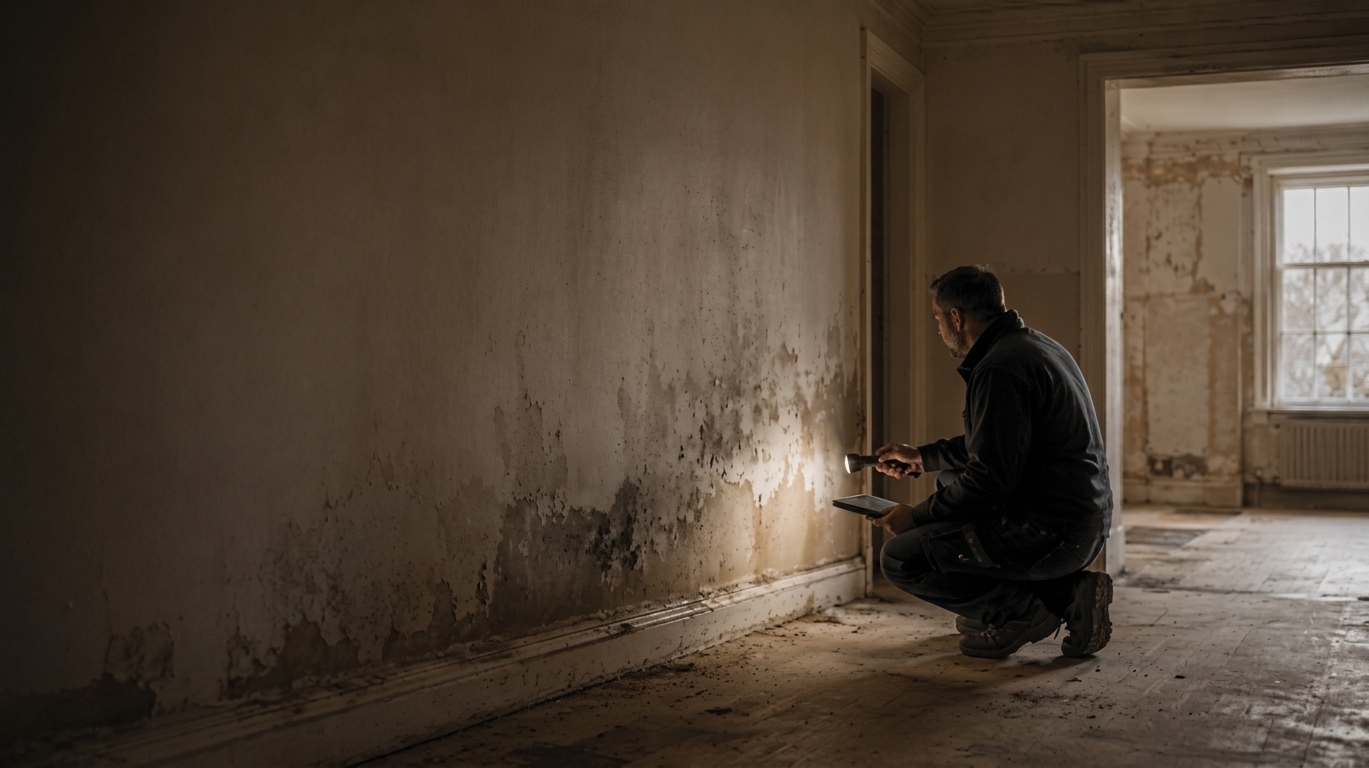
After an escape of water, flood or leak, the area that looks wet is not always the full area that has been affected. Water can move through or around building materials, enter voids and travel along interfaces between floors, walls and finishes. The path depends on the source, volume, duration, construction and permeability of the materials involved.
The British Damage Management Association notes that understanding how water passes through affected building materials is fundamental to restoration and drying. Different materials absorb, retain and release moisture at different rates, so the drying strategy and reinstatement decision should reflect the actual construction.
Where hidden moisture can occur
- Behind plasterboard, panelling or wall finishes.
- Within timber floor voids or beneath floor coverings.
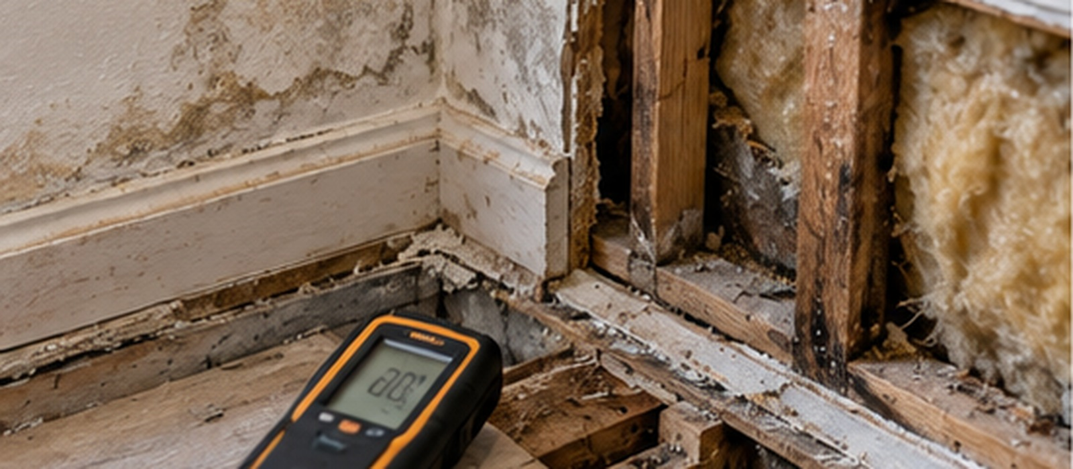
- Inside insulation, particularly where it has been enclosed between layers.
- At wall-to-floor junctions and beneath skirtings.
- Under fitted kitchens, baths, shower trays or built-in joinery.
- Within ceilings below a leak source.
- In porous masonry, plaster, screeds and timber.
Why materials behave differently
Porous materials can absorb liquid water and later release moisture as conditions change. Vapour can also move through permeable materials. Less permeable finishes may slow evaporation, meaning a surface can appear dry while moisture remains deeper within the build-up.
This is one reason why drying decisions should not be based solely on appearance. The condition of the substrate, surrounding areas and any enclosed materials may need to be assessed before the area is closed, tiled, decorated or covered with flooring.
Moisture readings are evidence, not a complete diagnosis
Moisture meters can be useful tools when they are used appropriately and interpreted in context. Some meters provide relative readings rather than an absolute moisture-content value for every material. Readings should therefore be compared sensibly and considered alongside the construction, visible condition, source of water and drying history.
Where the consequences of hidden moisture are significant, further investigation or controlled opening-up may be justified. Specialist drying or other professional input may also be required depending on the loss.
What can happen if reinstatement is too early?
Closing a damp build-up too early can create avoidable problems. These may include staining, paint or plaster failure, movement of timber or flooring, persistent odours, deterioration of vulnerable materials and conditions that support microbial growth. The likelihood and severity depend on the material, contamination, environmental conditions and time involved.
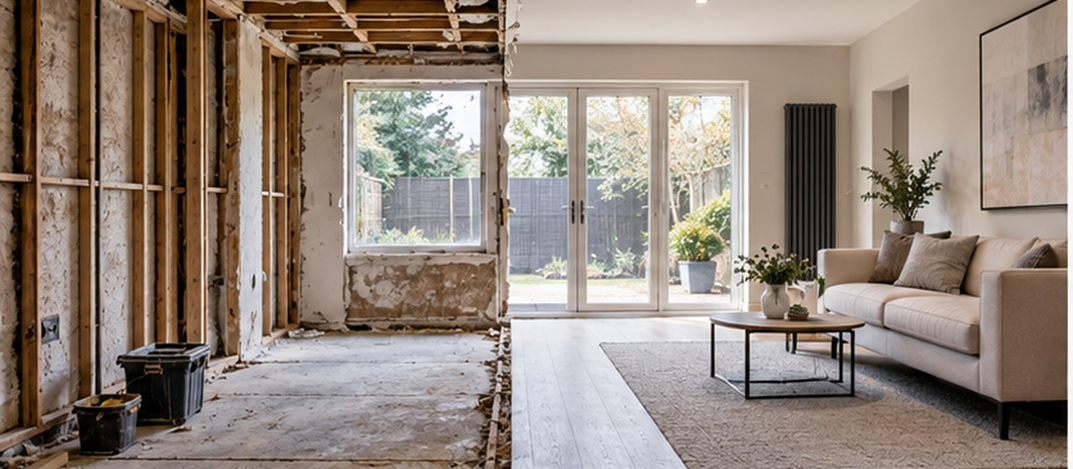
The correct response is not to strip out everything automatically. Unnecessary removal can increase cost and disruption. The objective is to establish which materials can be dried and retained, which need cleaning or treatment and which are no longer suitable for reinstatement.
Drying and reinstatement are linked
The Association of British Insurers recognises drying and decontamination as potential parts of buildings-insurance repair. In practice, reinstatement planning should consider whether the source has been resolved, whether affected areas are accessible, whether contaminated or damaged materials need removal, and whether substrates are suitable for the next stage of work.
A dry-looking surface is not proof that an entire wall, floor or ceiling build-up is ready for reinstatement. Equally, a high meter reading on its own does not automatically prove that wholesale replacement is required.
Sources and further reading
The following authoritative sources were checked when preparing this guide: