
LEAK TRACK & TRACE | TRACE & ACCESS
Leak Track & Trace and Trace & Access London
Escape of water investigation, moisture assessment and controlled access for homes, flats and managed properties across London.
Suspected or active leak? AWJ Construction investigates the likely source, assesses how far moisture has spread and carries out controlled trace and access where appropriate. If the escape of water has caused property damage, we can continue through drying, strip out and complete reinstatement.
Standard attendance £350 + VAT including the first hour | Additional time £85 + VAT per hour
Fully Insured
INSURANCE REINSTATEMENT
MOISTURE ASSESSMENT
CLEAR DOCUMENTATION
When To Call
Suspected Water Leak? Start With the Source
Water does not always appear directly beneath the defect. It can travel behind tiles, through service voids, beneath flooring, along joists, across ceilings and into adjoining rooms or properties below before the full extent of the problem becomes visible.
If you have unexplained dampness, recurring staining, a wet ceiling, lifting flooring, persistent mould, dropping boiler pressure or water appearing away from an obvious plumbing defect, a structured investigation can help establish the likely source and the next practical step.
Common reasons to arrange an investigation
- Active or intermittent water leak with no obvious source.
- Water staining to ceilings, walls or adjoining rooms.
- Flooring, skirting or fitted joinery swelling after a suspected leak.
- Recurring damp or mould where an escape of water is suspected.
- Water damage from a bathroom, kitchen, heating system or neighbouring property.
- An insurer, managing agent or property manager has asked for Trace & Access or evidence of the source.
- You need to understand whether drying, opening up or reinstatement is likely to be required.
Investigation
What an AWJ Leak Investigation Can Include
- Initial discussion and site triage.
- Visual inspection of the affected and surrounding areas.
- Moisture meter readings to relevant accessible building materials.
- Thermal imaging where temperature patterns may assist the investigation.
- Inspection of accessible plumbing, waste connections and surrounding finishes.
- Assessment of likely water-migration routes and secondary damage.
- Controlled opening up where appropriate, authorised and within the agreed scope.
- Photographic record of relevant findings.
- Identification of areas that require specialist leak detection or another trade.
- Clear recommendation for the next practical stage.
Trace & Access
What Is Trace & Access?
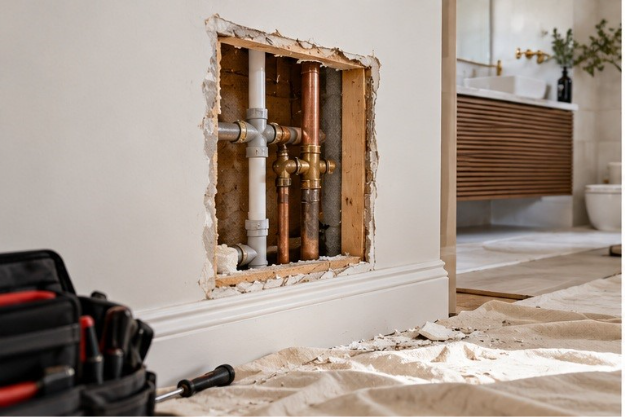
Trace & Access is the process of locating a concealed leak and gaining the access needed to reach, confirm or repair the source. Where a defect sits behind a wall, beneath flooring, inside boxed pipework or above a ceiling, controlled opening up may be required.
AWJ approaches opening up as a building operation rather than trial-and-error demolition. The objective is to access the relevant area while avoiding unnecessary damage to unaffected finishes and preserving a clear record of what has been opened and why.
Controlled access may involve
- Pipework boxing
- Plasterboard walls or ceilings
- Bath panels and access panels
- Flooring and local floor build-up
- Tiles and wet-area finishes
- Kitchen or bathroom finishes where access is otherwise restricted
Where circumstances allow, the proposed access is discussed before work proceeds. Relevant stages can be photographed so the customer has a record of the investigation and any opening up carried out.
WHEN SPECIALIST LEAK DETECTION IS REQUIRED
AWJ does not claim that every concealed leak can be located with visual inspection, moisture readings or thermal imaging. Some investigations require specialist acoustic detection, tracer gas, pressure testing, drainage cameras or other dedicated equipment. Where that level of specialist detection is required, we will explain the next step clearly and recommend or coordinate the appropriate specialist rather than overstate what has been confirmed.
Escape of water investigation
Finding the Leak Is Only Part of the Job
Once water has escaped into the building fabric, the visible stain is not necessarily the full loss. Water can affect plasterboard, insulation, timber, floor build-ups, underlay, engineered flooring, fitted furniture, bathroom finishes, skirting, ceilings and adjoining rooms.
The next question is not only “Where is the leak?” but also “What has become wet, what can reasonably dry in place, what may need to be removed, and what must happen before the property can be properly reinstated?”
Areas and materials that may need assessment
- Walls and plasterboard ceilings
- Timber joists and floorboards
- Subfloors and floor build-ups
- Insulation and concealed voids
- Laminate, engineered flooring and underlay
- Kitchen and bathroom units
- Skirting, architraves and fitted joinery
- Adjoining rooms and properties below
AWJ can use moisture readings, visual evidence and the construction of the property to help define the affected area and establish whether further drying, strip out, specialist input or reinstatement is required.
CORE MESSAGE
Stopping the source is the first stage. A good recovery plan also needs to understand the extent of the water damage and the condition of the affected materials before finishes are closed back up.
Our process
What happens during an AWJ leak investigation?
01
Triage Before Attendance
We establish what has happened, whether water is still escaping, where it is visible and whether there are access, neighbouring-property or insurance issues that may affect the investigation.
02
On-Site Investigation
The affected areas are inspected using the methods appropriate to the circumstances. This may include visual inspection, moisture readings, thermal imaging and checks to accessible plumbing or surrounding rooms.
03
Stop or Contain Where Appropriate
If the source is accessible and the required action falls within the capability and agreed scope of the attendance, we will aim to stop or contain the leak. Where a plumber, electrician, drainage specialist or other trade is required, we will explain the next step.
04
Controlled Trace & Access
If the suspected source is concealed, opening up may be proposed. The aim is to reach the relevant area while limiting unnecessary damage and recording the work carried out.
05
Moisture and Damage Assessment
We assess how far water appears to have travelled and which accessible materials or adjoining areas may have been affected.
06
Record the Findings
Relevant photographs, readings and observations are recorded. The level of written reporting depends on the agreed service and whether a separate insurer-facing report is required.
07
Clear Next-Step Recommendation
We explain what should happen next. This may be source repair, specialist leak detection, drying, further monitoring, strip out, mould remediation, an insurance reinstatement scope or repair works.
Continuity
From leak investigation to complete reinstatement
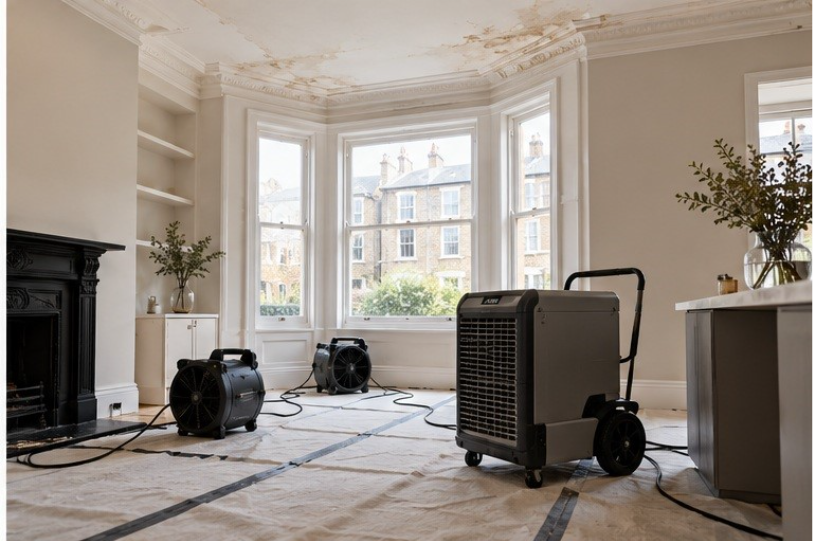
AWJ is not limited to locating the likely source and leaving the customer to coordinate the recovery alone. Where an escape of water has caused building damage, we can remain involved through the contractor side of the recovery process.
01
Investigate
Establish the likely source, moisture spread and affected areas.
02
Resolve the Source
Carry out the repair where appropriate or coordinate the plumber, specialist or other trade required.
03
Dry and Monitor
04
Strip Out Where Necessary
Use controlled drying and moisture monitoring where the building fabric requires it.
05
Scope and Quote
Prepare a clear reinstatement scope and itemised quotation where insurance or property-management approval is required.
06
Reinstate
Complete the agreed building repairs, plastering, flooring, carpentry, tiling, bathrooms, decoration and associated works.
07
Complete and Handover
WHY THIS MATTERS
For customers with an insurance claim, this creates continuity between the initial investigation, drying, documentation and the eventual reinstatement works instead of starting again with a different contractor at each stage.
Clear pricing
Leak Investigation Pricing
£350 + VAT
Standard Leak Investigation Attendance
Call-out and first hour on site.
£85 + VAT / hour
Additional Investigation Time
Charged after the first hour where more time is required.
What the first hour may include
- Initial discussion and site triage.
- Visual inspection of the affected areas.
- Moisture readings where appropriate.
- Thermal imaging where useful to the investigation.
- Inspection of accessible plumbing and surrounding finishes.
- Initial photographic record of relevant findings.
- Advice on the likely next step.
Additional costs
Parts, materials, specialist trades, specialist leak-detection equipment, controlled opening up, repair of opened finishes, drying equipment and detailed third-party or insurer-facing reports are not automatically included in the standard first-hour attendance unless expressly agreed.
Where reasonably practicable, additional work and cost will be explained and agreed before it is undertaken. If immediate action is required to reduce ongoing damage or address a safety issue, the position will be discussed with the customer as soon as practicable.
IMPORTANT PRICING WORDING
The £350 + VAT attendance is a professional investigation service; it is not a guarantee that every concealed leak can be conclusively located within the first hour. Where further investigation or specialist equipment is required, AWJ will explain the next stage.
Insurance claims
Trace & Access and insurance claims
If the damage may form part of an insurance claim, notify your insurer as soon as reasonably possible and follow any emergency instructions they provide. Many buildings policies include some form of Trace & Access cover, but the wording, limits and exclusions vary between policies.
AWJ does not determine insurance coverage or guarantee that a particular cost will be reimbursed. Our role is to investigate the building issue, record the relevant findings and provide contractor-side information that may assist the customer, insurer, loss adjuster, managing agent or property manager.
Depending on the agreed service, AWJ can provide
- Photographs of the affected areas and relevant investigation work.
- Moisture readings and observations.
- Description of the suspected or confirmed source where established.
- Details of controlled opening up or emergency works carried out.
- Recommendations for drying, strip out or further specialist investigation.
- A separate reinstatement scope and itemised quotation where required.
Areas we cover
Homes, flats and managed properties across London
AWJ can attend residential and commercial properties where a suspected escape of water needs to be investigated and the resulting building damage understood.
AWJ Construction operates across London, with a particular focus on Hackney, Haringey, Islington, Waltham Forest, North London and East London. Wider London attendance is available subject to the nature of the problem, access and programme availability.
- Houses
- Flats and apartments
- Landlord and rental properties
- Managed blocks and communal buildings
- Offices and commercial premises
- Properties involving a managing agent or freeholder
- Insurance-related escape-of-water claims
Why AWJ
Why Choose AWJ Construction?
- Building-led investigation rather than a basic plumbing call-out.
- Clear distinction between what has been observed, what is suspected and what requires further specialist confirmation.
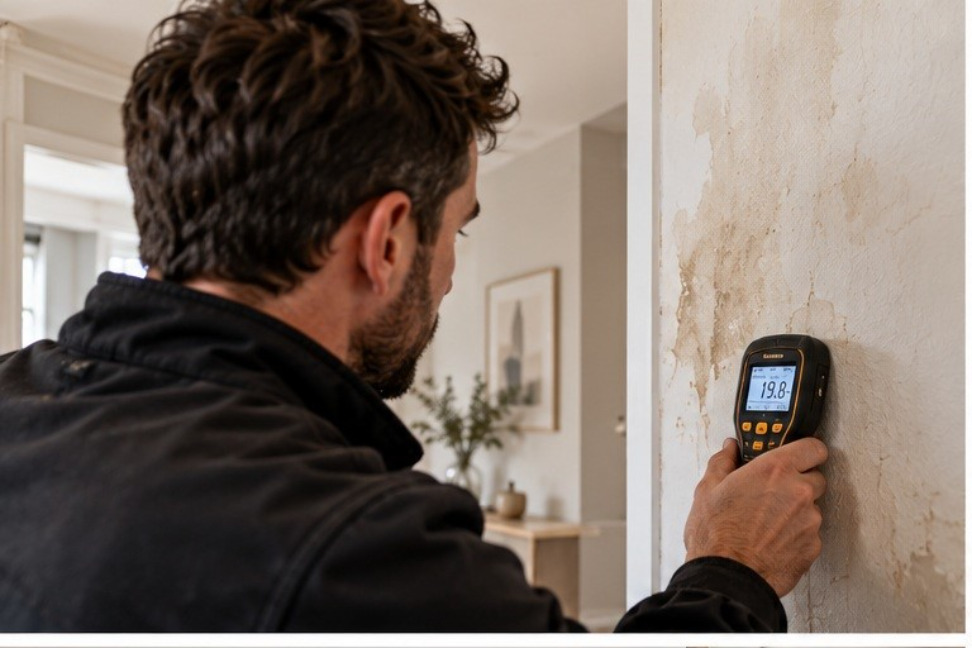
- Professional moisture measurement equipment and thermal imaging where appropriate.
- Controlled Trace & Access with attention to retained finishes.
- Insurance reinstatement experience and contractor-side documentation.
- Ability to continue through drying, strip out and complete reinstatement where required.
- Clear pricing before attendance and explanation of additional work where practicable.
- Experience working in London flats, occupied homes and managed properties.
Common Questions
Frequently Asked Questions
How much does a leak investigation cost?
Can you find every type of leak?
Can you stop the leak during the visit?
Can you open walls, ceilings or floors to reach the leak?
What if the leak is coming from another flat?
Will my insurance pay for Trace & Access?
Do you provide a report?
Can you provide drying equipment?
What happens if mould is found?
Can you provide a repair or reinstatement quotation afterwards?
Can you deal with my loss adjuster or managing agent?
Do I need to wait for the property to dry before repair work begins?
Suspected or active water leak?
Request a Leak Investigation
Get the likely source investigated, understand how far the moisture has spread and establish a clear next step before the damage becomes more extensive.